Scan for mobile page
QR
Plastic recycling
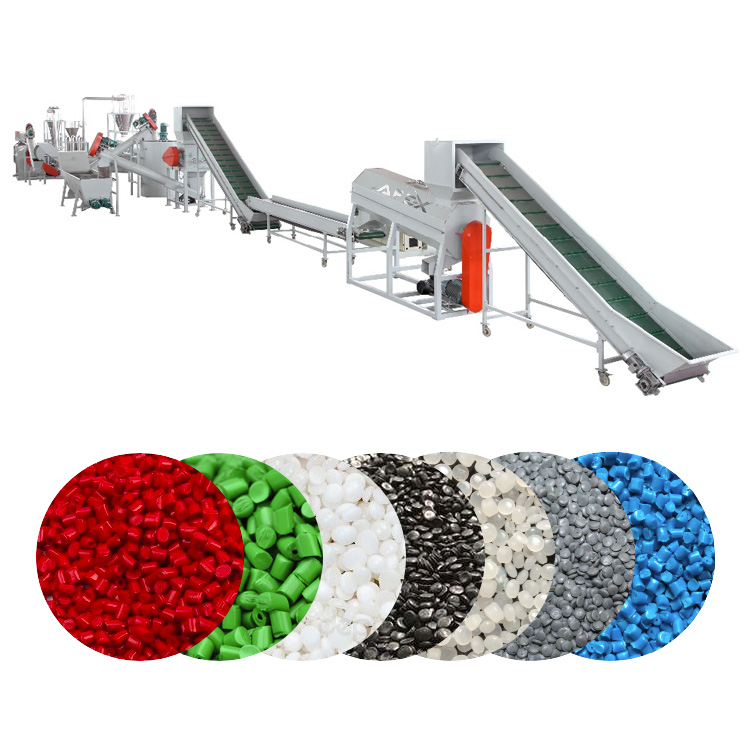
PE / PP waste processing line
As the production sector is developing in the modern world, attention is being increasingly paid to the waste processing sector. Currently, in all developed countries, the processing industry occupies a significant place in the ecological economy of the country, and the international community is also demanding it.
At the same time, the amount of investments in this field has been increasing in our country in recent years. For this reason, AFEX-GROUP company members offer a variety of recycling equipment in order to help entrepreneurs contribute to the economy and ecology of our country. It is the turn of our equipment for processing polyethylene and polypropylene cellophane products.
Price
$155,800
A
Aziz Karimov
I reply within 12 minutes
Specifications
| Engine power | 6kw |
| Number of stationary blades | 4 |
| Number of rotating blades | 6 |
| Blade material | SKD11 |
| Spindle speed | 650rmp |
| General dimensions | 2300*1250*1400mm |
| Equipment weight | 1,75T |
| Engine power | 11kw |
| Rotation speed | 500r/min |
| Working dimensions | 380*3500mm |
| Material | Carbon metal |
| Weight | 1,1T |
| Engine power | 1,5kw |
| Dimensions | 4000*1000*400mm |
| Weight | 380kg |
| Engine power | 30kw |
| Spindle rotation speed | 1400rmp |
| General dimensions | 2,25*1,5*1,6 m |
| Capacity | 500kg |
| Material | Carbon (inside SS304) |
| Weight | 1000kg |
| Screw diameter | 250 mm |
| Screw length | 3,6 metr |
| Screw material | 40Cr |
| Engine power | 90kw(inverter) |
| Electromagnetic heating power | 240kw(80kw*3) |
| Screw diameter | 200 mm |
| Screw length | 1,6 metr |
| Engine power | 45kw |
| Heating capacity | 20kw |
| Working power | 10kw |
| Cooling tank dimensions | 2500*350mm |
| Engine power | 5,5kw |
| Spindle rotation speed | 1450 r/min |
| Equipment dimensions | 1200*1150*1800mm |
| Material | Stainless metal |
| Engine power | 3kw |
| Size | 3 metr/kub |
Description
 General information
Raw materials: PE and PP cellophane, package and plastic products
Production volume: 400-500 kg/hour
Total capacity: 210 kw/h
Water consumption: 5 tons/hour
Number of workers: 4-5
Total required area: 150 square meters
Final product state: granule
Equipment list
Now let's get acquainted with the list of all the equipment in the processing line. The line generally consists of two parts: grinding-washing, granulation.
Grinding-washing
General information
Raw materials: PE and PP cellophane, package and plastic products
Production volume: 400-500 kg/hour
Total capacity: 210 kw/h
Water consumption: 5 tons/hour
Number of workers: 4-5
Total required area: 150 square meters
Final product state: granule
Equipment list
Now let's get acquainted with the list of all the equipment in the processing line. The line generally consists of two parts: grinding-washing, granulation.
Grinding-washing
- Conveyor
- Grinding equipment
- Washing equipment
- Washing pools
- Special sediment conveyor
- Delivery equipment
- Drying equipment
- Control point
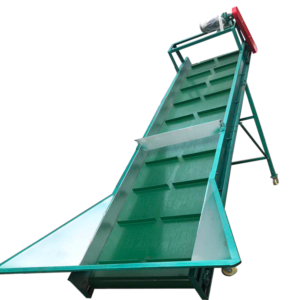 So, we put all waste and raw materials on a special conveyor. This conveyor delivers to the next crushing equipment in its direction. The equipment has a 1.5 kW motor, and the working length is 6 m in total.
The second stage
So, we put all waste and raw materials on a special conveyor. This conveyor delivers to the next crushing equipment in its direction. The equipment has a 1.5 kW motor, and the working length is 6 m in total.
The second stage
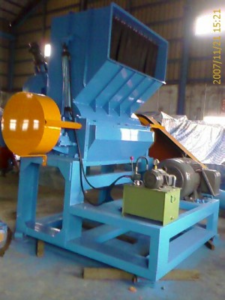
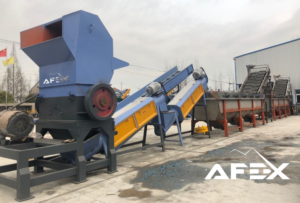
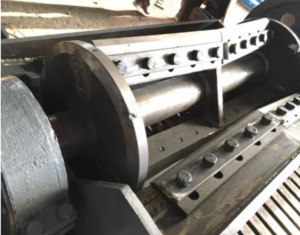 One of the main equipment in this section is the crusher equipment. He grinds all the raw materials to the required size.
- New blade design, increase production.
- High speed dynamic balance. The noise is less than the old generation equipment and the grinder is equipped with shock absorption system to ensure continuous operation.
The third stage
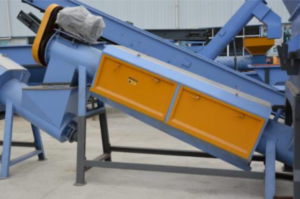 In the next equipment, crushed packages, cellophane are cleaned of solids. The task of the equipment is to catch them and deliver them to the next washing equipment.
The fourth stage
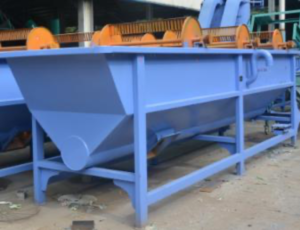
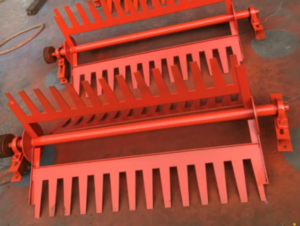
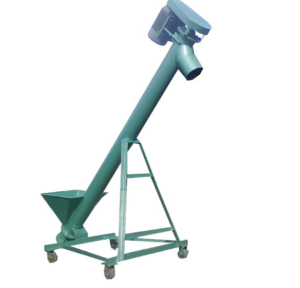 In this washing machine, we clean only water-soluble products from waste. Solids such as sand, stone and PVC settle to the bottom of the washing tank. Sediments are removed through a special auger conveyor.
The fifth stage
In this washing machine, we clean only water-soluble products from waste. Solids such as sand, stone and PVC settle to the bottom of the washing tank. Sediments are removed through a special auger conveyor.
The fifth stage
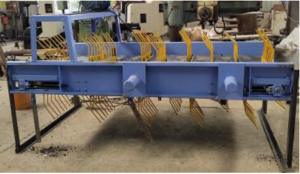 At the very last stage of the recycling process, the bags are washed again.
The sixth stage
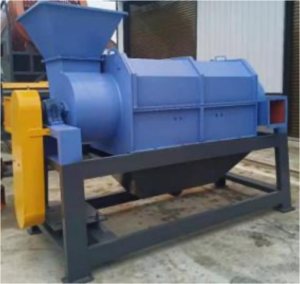
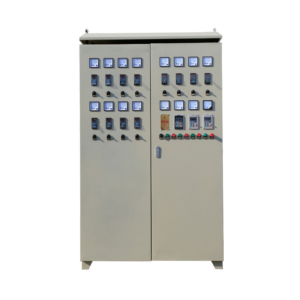 At the very last stage of the first washing-grinding part, the ground products are dried. All processes are regulated through the control point.
Granulation
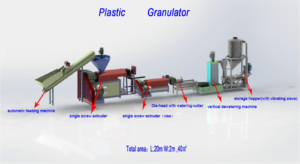
The first stage
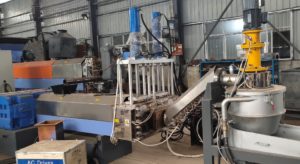
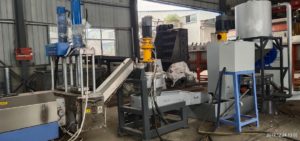
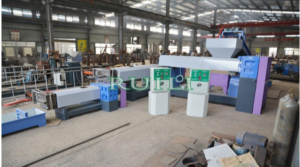 At this stage, the dried-crushed waste is once again crushed into granules. For this we need all the equipment in the picture above. 2 extruders are included in the equipment set.
The second stage
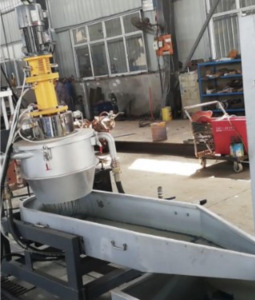 Pellets are cut using this equipment. It is also washed and cooled with water during the cutting process.
The third stage
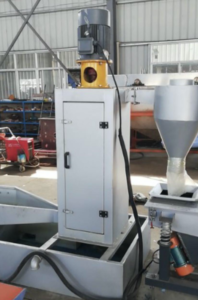 At the last stage, we dry our washed granules. After drying, they are ready for sale.
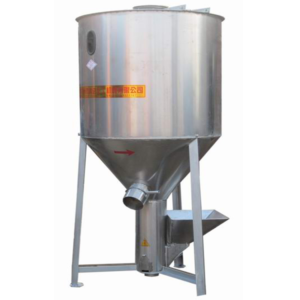
Finally, a vibrating silo is needed to clean the finished products.
At the last stage, we dry our washed granules. After drying, they are ready for sale.
Finally, a vibrating silo is needed to clean the finished products.
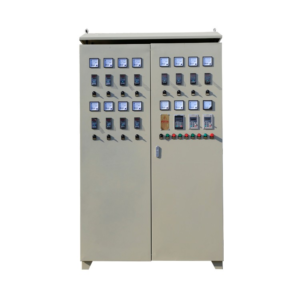
 It is managed through a control point to control the equipment.
A video of the working process
https://youtu.be/px6JXG4Yr8c